

The Bulls are searching for a new direction. They may have already limited it

As the Bulls begin searching for a new direction, there are signs of the same instinct that shaped the last one: the desire to move forward without fully letting go.

The Chicago Bulls made the decision they had to make.
After six seasons defined by repetition in approach, in messaging, and in results, moving on from Artūras Karnišovas and Marc Eversley wasn’t just justified. It was overdue.
For the first time in a while, there was clarity in that. What followed, though, felt more familiar.
In announcing the change, Michael Reinsdorf outlined what the organization is now searching for: a more process-oriented leader. Someone with conviction. Someone who communicates clearly, internally and externally. Someone capable of building something sustainable.
It was a revealing list — not just because of what it described, but because of what it implied.
Those weren’t abstract qualities. They were acknowledgments of what had been missing, what hadn’t been enforced, and what, in some cases, had been allowed to drift.
Which is why what came next mattered.
Before the search can even fully begin, one decision has already been made.
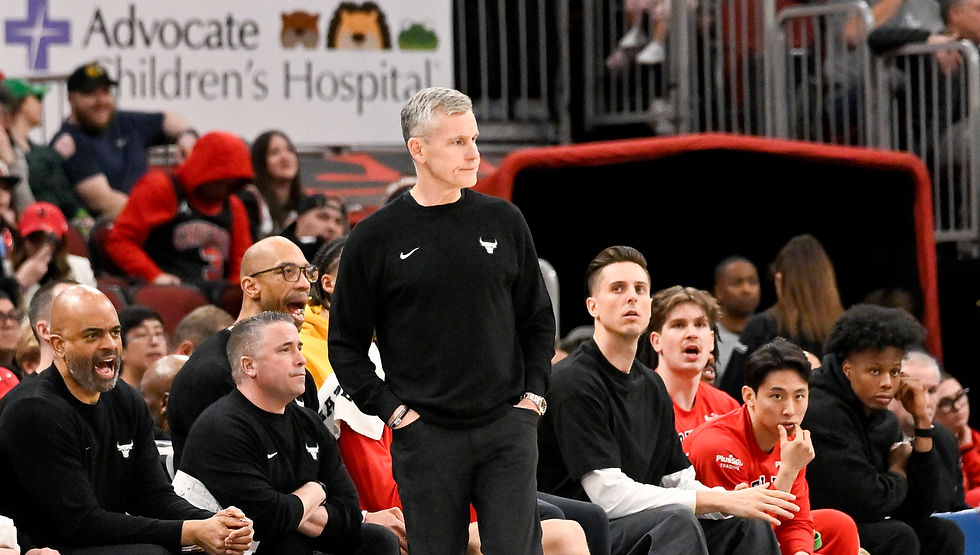
Reinsdorf made it clear that the organization wants Billy Donovan to remain as head coach.
On its own, that’s defensible. Donovan is respected across the league. He has credibility in the locker room.
Stability, in a vacuum, has value.
But this isn’t a vacuum. This is a reset. And resets are supposed to come with latitude, not conditions.
By publicly staking out a preference for Donovan before hiring a new head of basketball operations, the Bulls have quietly narrowed the scope of their own search. Any incoming executive won’t just be evaluated on vision or philosophy, but on alignment with a decision they didn’t make.
That doesn’t make the job less appealing. It makes it more defined.
And definition, in this context, cuts both ways.
The Bulls say they want fresh perspective. They say they want new ideas. They say they want someone capable of building something different than what came before.
But they’ve also signaled that at least part of that structure is already in place.
That’s not a clean slate. It’s a conditional one.
There’s a similar tension in the decision to bring in a search firm.
On one level, it’s a smart move. The role they’re trying to fill has evolved well beyond traditional scouting and roster construction.
Modern front offices are complex, layered operations, blending analytics, development, performance, and strategy.
Identifying the right person to lead that requires more than familiarity. It requires perspective.
Outside help can provide that.
But it also raises a quieter question.
If the organization needs assistance defining the profile of its next leader, what does that say about how that role has been defined or understood internally?
Search firms can widen the pool. They can structure the process. They can surface candidates ownership might not otherwise find.
What they can’t do is supply clarity of purpose. That still has to come from within.
And that’s where the Bulls’ recent history lingers.
That history shows up in smaller ways, too — in how progress has often been framed through short stretches or individual results, rather than sustained direction.
The outcome changes. The interpretation doesn’t.
For years, the organization has operated in a space that is organized, functional, and ultimately unresolved. Competitive enough to justify continuity. Incomplete enough to demand change. Caught between patience and urgency, without ever fully committing to either.
This decision is meant to break that cycle. In some ways, it does.
Moving on from Karnišovas and Eversley is an acknowledgment that the previous approach wasn’t working.
But acknowledgment isn’t the same as correction.
Because even now, as the Bulls begin searching for a new direction, there are signs of the same instinct that shaped the last one: the desire to move forward without fully letting go.
To reset, but not entirely.
To change, but selectively.
It’s possible this process leads them to the right hire. It’s possible the next front office is empowered, aligned, and decisive in ways the last one wasn’t.
But it’s also fair to recognize the pattern.
The Bulls aren’t starting from zero. They’re starting from a place they’ve been before, trying to solve a problem while holding onto parts of it.
The decision to move on was necessary.
What comes next will determine whether it was meaningful.


This article immediately caught my attention because of its smooth flow and reader-friendly approach. The introduction provided enough background before moving into detailed explanations that remained simple and engaging. Somewhere in the middle of the discussion, Jai Club register appeared naturally while describing one of the important aspects of the topic, fitting perfectly into the surrounding content. Every section added fresh insights that made the guide informative without becoming repetitive. Before finishing the article, Jai Club register was mentioned once more while connecting the major ideas covered throughout the discussion. Overall, it was an engaging, informative, and well-structured resource.