

The Bulls Waited Too Long for Wins Like This to Matter
- Drew Stevens (@ByDrewStevens)

- Mar 17
- 4 min read

The Chicago Bulls did exactly what they were supposed to do Monday night.
They defended with energy. They moved the ball. They turned a competitive game into a comfortable 132–107 win over the Memphis Grizzlies.
And with it, they made the path toward their own future slightly more difficult.
Because the opponent wasn’t just another team on the schedule. It was the only team the Bulls have a realistic chance of catching in the lottery standings.
Instead, the win pushed the Bulls to 28–40 and stretched Memphis’ cushion in the reverse standings to 4.5 games, a margin that currently represents roughly a six-percent difference in the odds of landing a top-four pick in the draft.
It also tightened the space beneath them.
The Milwaukee Bucks sit just a half-game behind the Bulls in the lottery standings, leaving Chicago squeezed between a team it needs to catch and a team that could still pass it.
Those margins matter.
Around the league, this particular draft is widely viewed as offering several prospects capable of altering a franchise’s trajectory. For a team that has spent much of the past decade searching for a foundational talent, positioning in that race carries obvious weight.
On nights like this, though, that reality lives entirely outside the locker room.
Players don’t calculate lottery odds between possessions. Coaches don’t consult draft probabilities.
The Bulls played like a team trying to win.
For long stretches Monday night, they looked good doing it.

Matas Buzelis ignited the turning point.
Midway through the third quarter, the 21-year-old forward helped spark a 21–4 run that broke the game open, scoring 18 of his 29 points during the stretch while attacking Memphis defenders off the dribble and behind the arc.
By the end of the night, Buzelis had joined Victor Wembanyama as the only players this season to record at least 100 blocks and 100 made three-pointers.
When I relayed the stat to him afterward, Buzelis seemed taken aback. Across the locker room, his teammate Tre Jones simply said, “Wow.”
Elsewhere, Leonard Miller added 10 points, seven rebounds and two three-pointers while continuing to carve out space in a rotation that has often shifted around him. Rob Dillingham finished with 15 points and four assists, shooting 6-of-15 from the field while navigating the uneven decision-making Donovan has flagged as his most critical growth area.
This is what development looks like.
It’s also what delayed direction looks like.
Because the tension surrounding the Bulls’ 4-4 start to the month isn’t that the players are trying to win games. It’s that the organization waited so long to reshape the roster that winning now carries consequences it might not have earlier in the season.
By the time Artūras Karnišovas and Marc Eversley pivoted at the trade deadline, several teams around the league had already spent months separating themselves in the standings.
The math had hardened.
Teams that committed to the bottom early gave themselves room for nights like this. The Bulls, after spending the first half of the season attempting to remain competitive, don’t have that luxury.
Now they occupy the familiar space of being good enough to win some games, but late enough in the process that each one subtly works against the odds they’re chasing.
Memphis, ironically, represents exactly the type of team Chicago needs to catch.
The Grizzlies also happen to have the toughest remaining schedule in the league, while the Bulls sit much closer to the middle of the pack. The two teams will meet again on March 28, a game that could carry more lottery implications than either team will acknowledge publicly.
The gap created Monday could still shrink.
But that possibility is beside the point.
The players inside the Bulls’ locker room aren’t going to chase lottery positioning. Nor should they.
“I don’t believe in losing for any reason,” Buzelis said. “I want to win every game. That’s just how I am.”
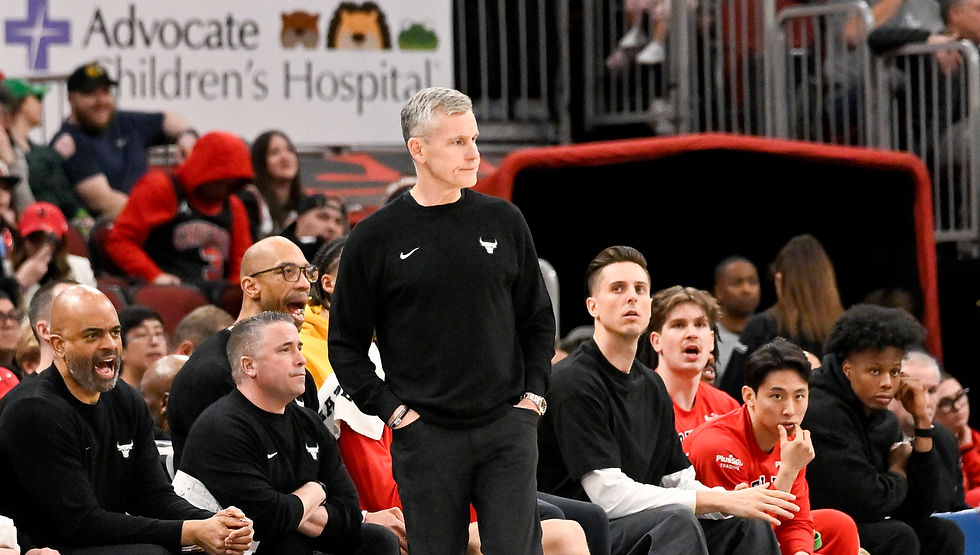
Billy Donovan echoed the same sentiment afterward.
“We’re giving all these guys the opportunity to play,” Donovan said. “Everything that I’ve gotten from ownership and the front office has been about going out there and competing and trying to win.”
That’s the job description.
The players are doing theirs. Donovan is doing his.
The lingering question surrounding the final weeks of this season belongs somewhere else.
Because the Bulls didn’t arrive at this late-season contradiction by accident. They arrived here by waiting until February to acknowledge a direction that had been looming long before the trade deadline arrived.
Had the roster been reshaped earlier, the development now happening in March might have unfolded over half a season instead of a handful of weeks. The wins that now feel costly might not have carried the same weight.
The standings might look different.
Instead, the Bulls are trying to thread the narrow path of developing young players while hoping the lottery math cooperates.
And in a draft where the difference between picking eighth and landing in the top four could reshape a franchise’s trajectory, those margins carry consequences.
If the lottery balls fall the wrong way this spring, the Bulls won’t have lost their opportunity because of a March win over Memphis.
They’ll have lost it months earlier, when the organization waited until the margins for error were already gone.


Comments